
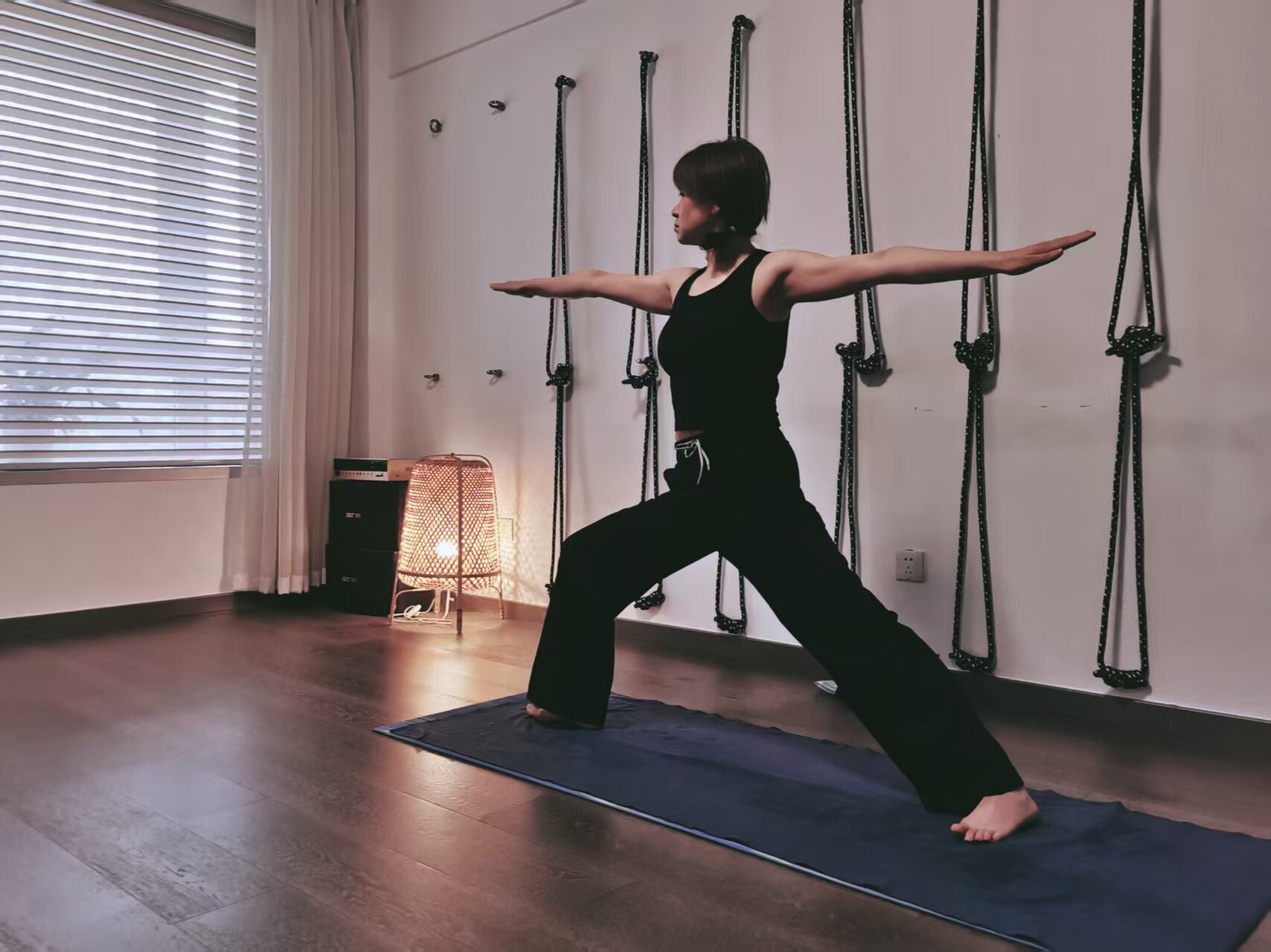
Warrior II: Ground yourself in stability, embrace contradiction with openness.
Etymology and Myth: Wrath Transformed into Compassion
Sanskrit Definition
Vira (Warrior) + Bhadra (Auspicious/Blessed) + Asana (Posture)
Meaning: "The Blessed Warrior's Form."
Myth Origins
Sati, Shiva's wife, immolated herself after her father Daksha insulted her. Overcome with grief, Shiva manifested the warrior Virabhadra from his hair to seek revenge. In the end, Shiva forgave and resurrected Daksha.
metaphor
- Transform anger into compassionStrength comes from love, not hate.
- Look inwardA warrior does not conquer outwardly, but conquers ego and fear.
- The Power of ForgivenessTrue strength lies in letting go of hatred.
Form as Symbol: Maintaining Balance Amid Tension
Legs: Rooted and Moving Forward
| Body Part | Action | symbol |
|---|---|---|
| Extend the hind legs. | Grounded in the earth | Past, Foundation, Stability (Sthira) |
| Bend the front knee | Charge forward | Future, Action, Change |
| Feet Diagonal | Static and dynamic balancing | Stillness within motion; motion within stillness. |
Arms: Past—Future—Present
- forearm: Point backward, accept the past, and let it go.
- forearm: Look to the future with vision and without anxiety.
- Center TorsoLive in the moment. Don't dwell on the past or worry about the future.
Drishti: Focus without attachment
Gaze straight ahead at your fingertips. Train the mind to cease its fluctuations (Citta Vritti Nirodha). Focus on the action itself, not the outcome.
Timeless Wisdom of Yoga
The Yoga Sutras: Stability and Focus
Sthira (Steady) + Sukha (Comfortable)
- Stay Soft Amidst Strength
- Stable yet open
- Focus your gaze to train concentration, returning from distractions to your inner center.
The Bhagavad Gita: Action Without Attachment to Results
Like Arjuna on the battlefield:
- Do your duty and act accordingly
- Do not be attached to success or failure, gain or loss.
- A warrior's courage is to act with clarity and compassion.
The True Meaning of Nonviolence (Ahimsa)
A true warrior harms neither self nor others; strength is for protection and growth, not aggression.
Life Philosophy: Be a Warrior of Your Own Life
Rooted in the present
Stay steady at your core, no matter the storm.
Embrace the contradiction
Accommodates up to:
- Strength and Softness
- Action and Acceptance
- Past and Future
Open, Not Crawled
Arms outstretched as if embracing the world, yet without controlling, possessing, or clinging.
Focused and calm
Act with full commitment; remain calm and clear-minded, free from emotional turbulence.
Key Practice Points
Preparation Phase
- Mountain Pose: Stand with feet about one leg length apart.
- Raise both arms out to the sides at shoulder height.
- Turn your right foot outward 90 degrees, and slightly angle your left foot inward.
Enter Pose
- Inhale, lengthen the spine upward.
- Exhale and bend your right knee to 90 degrees.
- Thighs parallel to the floor, knees aligned with ankles.
- Arms extend to both sides, palms facing down.
Breathing Coordination
- Inhale: lengthen the spine, open the chest
- Exhale: sink deeper, ground yourself more firmly.
- Keep: Breathe evenly and deeply.
Important Notes
- Keep your knees behind your toes to protect them.
- Turn hips to the side; keep in neutral alignment.
- Relax your shoulders; do not shrug.
- Comfortable neck, eyes level
Conclusion
Warrior II: Rooted in the earth, centered in the heart, and focused like a sword—be a gentle yet steadfast traveler on life's path.
True courage is not conquering the world, but mastering one's own mind; not showing off strength or fighting for dominance, but embracing compassion and inclusivity.
May you find inner strength and peace in Warrior II.
Namaste