
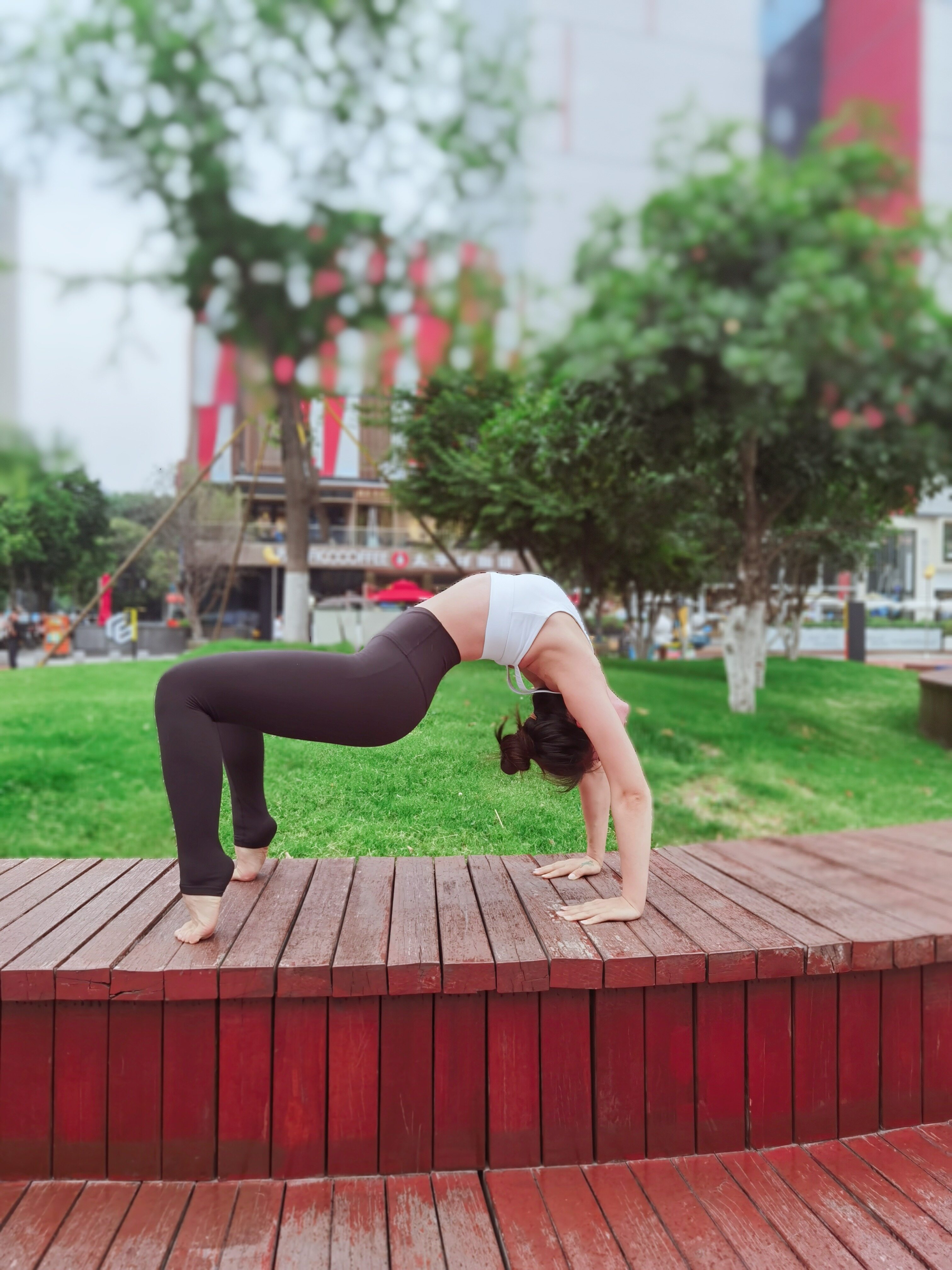
Tabletop Backbend | Wheel Pose Prep A (Ardha Urdhva Dhanurasana)
अर्ध उर्ध्व धनुरासन
I. Sanskrit Word Breakdown + Original Meaning
1. Ardha (अर्ध)
Meaning: half, partial, preparation, transition
Philosophical Implications: Represents transition and preparation, serving as a preliminary stage before the full pose.
2. Urdhva (उर्ध्व)
MeaningUp, raise, lift up, upward, spiritual energy rising
Philosophical Implications: Symbolizes energy flowing upward, rising from the root chakra to the crown chakra.
3. Dhanu (धनु)
Meaning: Bow, Arrow
Philosophical Metaphor: The spine curves like a bow—coiling energy, extending, and building tension, poised to release.
4. Asana
MeaningPostures: alignment, seated positions, and stable, grounded spiritual stances
Core PhilosophyStay steady in flux; remain present amid change.
Literal translationHalf Upward Bow Pose – A half backbend that extends upward like a drawn bow.
II. Complete Form Description
Action Steps (Command-style)
Starting position: Start in a supine position. Place your feet hip-width apart, with the soles flat on the floor. Position your hands under your shoulders, fingertips pointing toward your feet, and elbows slightly tucked in.
Inhale and pushEngage your core, glutes, and legs to lift the hips. Simultaneously, extend the chest forward and upward, opening the spine segment by segment into a smooth backbend arc.
Hold positionKeep your head naturally tilted back, relax your neck, and ensure your knees point toward your toes at all times. Avoid inward collapse.
Gradually declining: Maintain breathing in sets of 3–5. Slowly exhale and release the spine segment by segment.
III. Key Focus Areas
Engage your lower body
Distribute pressure evenly across the foot, pressing down simultaneously with the heel and both the inner and outer edges of the forefoot.
Draw the inner thighs toward the midline to activate the adductor muscles.
Actively drive the hips upward with the glutes to avoid excessive lumbar compression.
Keep your knees aligned with your toes; avoid inward or outward caving.
Engage upper body
Actively push off the ground using your shoulders and back, drawing your shoulder blades inward and downward.
Keep elbows tucked in and stable, shoulder-width apart or slightly narrower.
Avoid shrugging or flaring elbows; keep arms stable and supported.
Torso Control
Core micro-suction protects the lumbar spine and prevents compensatory compression.
Actively open the chest forward and upward, extending the thoracic spine.
Retract ribs to prevent flaring.
Spinal Extension
Backbend force is evenly distributed across the thoracic and lumbar spine.
Avoid excessive strain on a single area
Extend your spine segment by segment, not fold it.
IV. Key Benefits
Power Setup
Strengthen shoulders, back, arms, core, glutes, and legs
Build a foundational engagement pattern for backbends
Improve upper body support and core stability
Improve Flexibility
Deep stretch for chest, hip flexors, and rectus abdominis
Correct rounded shoulders, hunched back, and anterior pelvic tilt
Improve spinal flexibility and thoracic mobility
Advanced Basics
Build a foundation for Full Reverse Plank (Purvottanasana)
Prepare for Wheel Pose (Urdhva Dhanurasana)
Build Safety Awareness and Body Sensation for Backbends
Energy Awakening
Promotes blood circulation and awakens body energy.
Open your chest to relieve stiffness in your shoulders, neck, lower back, and upper back.
Activate the heart chakra to boost confidence and openness.
V. Taboos and Degradation
Contraindicated Population
Patients with rotator cuff injuries or wrist joint injuries
Acute phase of lumbar disc herniation
Patients with hypertension or heart disease
Cervical Spondylosis Patients
Pregnant women
This group should practice only under the guidance of a qualified instructor or avoid this activity.
Degradation Mode
You may slightly turn your feet outward to make the exercise easier.
Support your back against the wall and reduce the height of the hip lift.
Reduce shoulder, back, and waist strain
Use a yoga block to support the sacrum.
Advanced Mode
Gradually straighten your legs and arms.
Transition to Full Upward Plank Pose
Progress to Wheel Pose (Urdhva Dhanurasana)
Try One-Legged Tabletop Backbend
6. Breathing Coordination
Inhale: Prepare to lift, feel the energy rise.
Exhale: Slowly push up, maintaining smooth breathing.
Keep: 3-5 sets of deep breaths; feel your chest expand
Exhale: Slowly release, vertebra by vertebra
Conclusion
Tabletop Backbend is a foundational backbending practice that teaches how to open the chest while protecting the lower back, and how to find balance between strength and flexibility.
In every practice, feel your spine extend like a bow, energy rising upward. Seek breakthroughs through stability and experience openness and freedom in your body and mind with each breath.
Hello. 🙏
Want to learn more about detailed yoga poses and practice techniques?