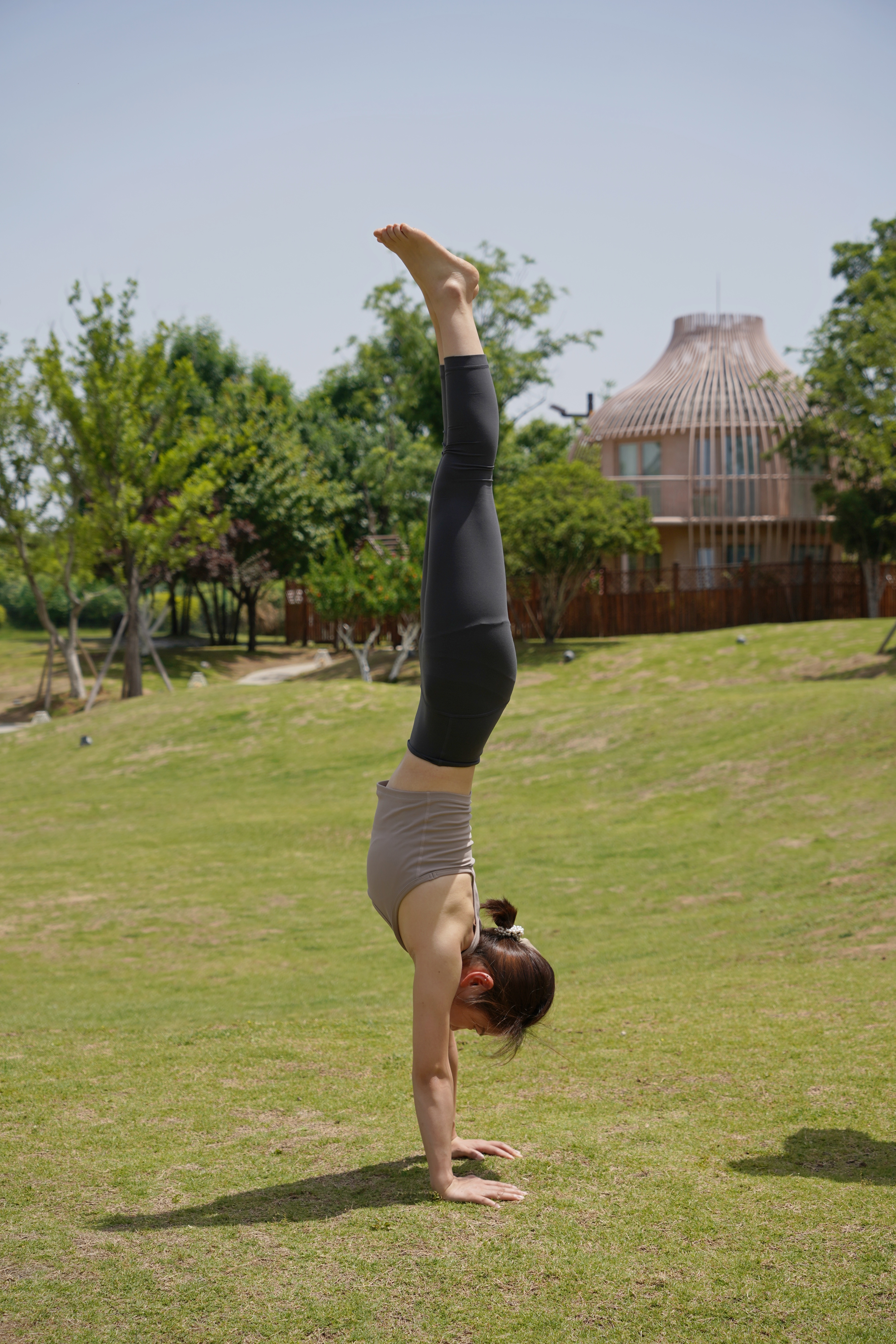
Handstand (Adho Mukha Vrksasana): Detailed Guide to an Advanced Inversion
Sanskrit and Meaning
Sanskrit: Downward-Facing Handstand (Adho Mukha Vrksasana)
Etymology:
Adho (अधो): Down
Mukha: Face
Vrksa: Tree
Asana: Body Style
Overall meaning: Downward-Facing Tree Pose / Handstand
Body Type: Advanced Inversions & Arm Balances
Detailed Practice Steps
Step 1: Get into position
Stand, lean forward and down. Open your hands to shoulder width in front of you, with fingertips pointing straight ahead.
Step 2: Lift your legs
Lift your right leg upward and stand on your left toes.
Step 3: Enter the Pose
When your right leg reaches the peak of the lift and you feel your left foot about to leave the ground, smoothly raise your left leg upward.
Step 4: Hold the Pose
Draw your legs together and press the soles of your feet upward.
Tighten your glutes, draw in your abdomen, and stabilize your core.
Retract the ribs; align the tailbone toward the sky.
Push firmly against the ground with both hands and fully extend your shoulders.
Look up, focusing on the center of your wrist.
Slightly retract the sternum
Extend the spine, gently arching the thoracic and lumbar regions.
Scapular upward rotation and abduction, shoulder flexion, elbow extension
Hip in neutral position, leg extended and adducted; knee extended.
Benefits of Handstands
1. Increase cerebral blood supply
Inverting boosts intelligence and reaction time by increasing fresh blood flow to the brain, activating brain cells, and enhancing focus and memory.
2. Prevent body deformation
Inversion helps tone your body, prevent sagging in the abdomen and buttocks, and sculpt defined lines.
3. Reduce facial wrinkles
Inverting can effectively reduce facial wrinkles, slow aging, and make skin firmer and more elastic.
4. Prevent disease
Inversion can help prevent and treat various conditions caused by prolonged standing and physical strain, including cerebrovascular diseases, varicose veins in the lower limbs, and back pain.
5. Strengthen upper body muscles
Handstands require strong arms, shoulders, and core. Regular practice significantly builds upper body strength.
6. Improve balance
Inversions require exceptional body control and balance, training the nervous system's coordination.
7. Boost confidence
Mastering the challenging handstand pose delivers a profound sense of accomplishment and boosts confidence.
Precautions and Contraindications
Pre-practice preparation
Warm up thoroughly, focusing on the wrists, shoulders, and core muscles.
Practice near a wall for initial support.
Breathe evenly; do not hold your breath.
Stop immediately if you feel unwell.
Contraindicated Population
Patients with hypertension or heart disease
Cervical Spondylosis Patients
Pregnant women
For users with wrist or shoulder injuries
Patients with severe myopia or eye diseases
Women during menstruation
Common Errors
Shoulder shrug: scapular abduction and upward rotation
Flat back: Engage your core and tuck your ribs.
Hold breath: Breathe naturally
Hands too wide or too narrow: Shoulder-width is ideal.
Progressive and Regression Exercises
Beginner: Level Reduction Practice
Wall Handstand: Face the wall, walk up it with your feet against the wall.
Dolphin StyleForearm Stand Prep Pose
Downward-Facing Dog: Build shoulder stability
Handstand with bent knees: Bend knees to lower center of gravity
Advanced Practice (for Experienced Users)
Wall-Free Handstand: Detach from wall support
Handstand walkingMove forward and backward while inverted
One-legged handstand: one leg straight, one leg bent
Straddle Handstand: Open legs to the sides
Conclusion
Handstand (Adho Mukha Vrksasana) is the perfect blend of strength and balance, embodying courage and focus at their finest.
In every attempt, feel the strength and stability of your body. In an inverted perspective, discover a new world and a new you.
Hello. 🙏
Want to learn more about detailed yoga poses and practice techniques?