
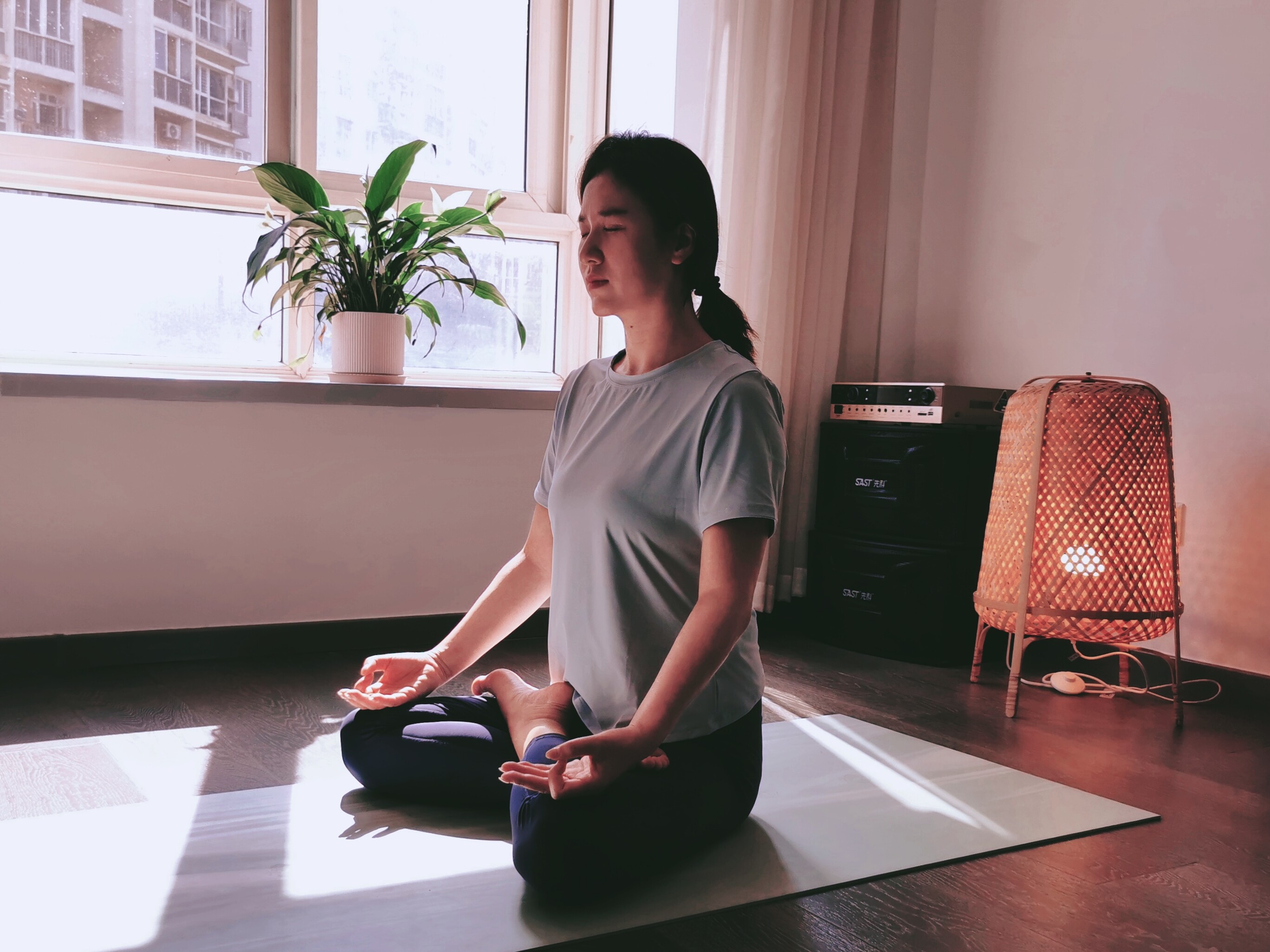
Meditation, Dhyana, and Samadhi: Understanding the Six States of Mind
On the path of yoga and meditation practice, we often hear terms like "meditation," "dhyana," and "samadhi." But what exactly distinguishes them? What layers of transformation does the mind undergo during practice?
This article clearly explains the six states of mind, helping you understand the complete path of practice from an ordinary person to an enlightened being.
I. Detailed Explanation of the Six States of Mind
1. Space Out: Daydreaming mindlessly
Status Features:
Doing nothing, zoning out
Thoughts wander freely without awareness.
Didn't refocus or rein in the mind.
Muddled thinking, drifting aimlessly
essence: This is the most basic state, where the mind wanders unconsciously. Like a wild horse without reins, it runs freely in any direction.
Common Scenarios:
Sitting by the window, lost in thought
Zoning out during class
Mindlessly scrolling through your phone
Lying there with a blank mind.
The meaning of spiritual practice: Doing nothing is not practice in itself, but it is the starting point of awareness. The moment you realize "I am doing nothing," awareness has already begun.
2. Contemplation: Engage your mind proactively
Status Features:
Constantly overthinking—dwelling on the past and worrying about the future.
Analyze, reason, and deliberate on the logic.
My mind keeps getting stuck in a loop of logic.
Brain is spinning non-stop.
essence: This is the active state of the mind. The mind is occupied by thoughts, flowing through concepts and logic.
Common Scenarios:
Thinking about work issues
Memories
Plan for the future
Hesitating on a decision
The meaning of spiritual practiceReflection is a necessary cognitive skill, but overthinking leads to mental fatigue. Practice isn't about stopping thoughts; it's about not being controlled by them.
3. Focus: Deliberately gather your attention
Status Features:
Deliberately pull your heart back.
Focus on a single point (breath, mantra, or visualization object).
Bring your focus back.
Proactively discipline the mind through effort.
Must be held firmly
essence: This is the true starting point of practice. Through deliberate training, develop the mind's ability to focus.
Practice Methods:
Focus on your breath: Notice each inhale and exhale.
Mantra Recitation: Repeat the mantra
Visualization: Focus on a specific visual object
Jingxing: Focus on every step you take.
Key Points:
It's normal to lose focus. Don't be hard on yourself.
The key is to "notice when your mind wanders" and "gently bring it back."
Every pull is a workout for your heart.
This is a gradual process that requires patience.
The meaning of spiritual practiceFocus is the foundation of all deep practice. Without it, meditation cannot go deeper.
4. Meditation: Observe thoughts in silence
Status Features:
Stay in the moment
Watch thoughts come and go.
Don't follow the crowd; don't judge.
Train mental stability and clarity.
Watch quietly
essence: Build awareness on the foundation of focus. It's no longer about "doing," but about "observing."
Difference from focus:
FocusFocus on one point and exclude others.
MeditationKeep an open mind: be aware of everything without getting involved.
Practice Methods:
Mindfulness Meditation: Awareness of Breath, Body Sensations, Emotions, and Thoughts
Insight: Observe the impermanence, suffering, and non-self of body and mind
Mozhao Zen: Just sit, clearly aware.
Key Points:
Don't follow: When a thought arises, notice it, but don't go with it.
Don't judge: Don't label thoughts as good or bad.
Unsuppressed: Let thoughts arise and pass naturally
Stay aware: Observe everything as a detached witness.
The meaning of spiritual practiceMeditation trains the mind's stability and clarity, serving as a bridge to wisdom.
5. Dhyana (Zen): Natural stillness
Status Features:
No need to hold back
Inner peace and tranquility
No need to force it or pull deliberately.
Quiet and peaceful
Calm and clear-minded
essence: As meditation deepens, deliberate effort naturally fades, and the mind settles into a state of natural calm.
Difference from meditation:
Meditation: and the subtle effort of "I am observing."
ZenLet go even of the effort to observe; rest naturally.
Experience Features:
Profound inner peace
Clear awareness, effortless.
A sense of joy arises naturally.
Timelessness
Peace of body and mind
The meaning of spiritual practiceZen is the mature expression of concentration and the essential path to samadhi.
6. Samadhi (Concentration): One-pointedness of mind
Status Features:
Mind fully settled in one place
Balanced and steady, neither drifting nor sinking.
Won't run even without control
Unity of Samadhi and Wisdom
Complete and Stable
essenceThe highest state of mental stability, where concentration and wisdom are fully integrated.
Experience Features:
Extreme clarity and stability
Dissolution of the subject-object duality
Merge with the observed object
Transcend time and space
Deep peace and joy
The meaning of spiritual practiceSamadhi is the advanced goal of yoga and meditation, serving as the foundation for enlightenment.
II. Relationship Among the Six States
Advanced Path
放空 → 沉思 → 专注 → 冥想 → 禅那 → 三摩地(Scattered) (Mind wandering) (Regain focus) (Awareness) (Natural stillness) (Complete stability)
Critical Turning Point
Zone out → ReflectFrom Careless to Caring
Meditate → Focus: From Scattered to Focused (The True Starting Point of Practice)
Focus → Meditation: From Effort to Awareness (A Quantum Leap)
Meditation → Jhana: From Deliberate to Natural (Mastery)
Dhyana → Samadhi: From Stillness to Wholeness (Equanimity of Wisdom and Meditation)
III. Practical Practice Suggestions
For beginners
Start with focus
Practice focused breathing for 10-15 minutes daily
Gently bring your focus back without self-blame.
The key is to build a consistent practice habit.
Cultivate Awareness
Stay mindful in daily life
Notice your emotions and thoughts.
Practice "watching" instead of "following."
Patience, step by step
Don't rush.
Embrace your ups and downs
Believe in the power of consistent practice
For experienced practitioners
Deepen Meditation
Extend meditation duration
Try different meditation techniques
Join a meditation retreat or course
Bring life together
Bring mindfulness into your daily life
Maintain awareness in all daily activities.
Practice and daily life are one.
Seek guidance
Get guidance from an experienced instructor
Avoid detours
Connect and learn with fellow practitioners
IV. Common Misconceptions
Misconception 1: Thinking meditation means emptying your mind
TruthZoning out is an unconscious state; meditation is a state of heightened awareness. They are completely different.
Misconception 2: Aiming for a mind without any thoughts
TruthThoughts are a natural function of the mind. Meditation is not about eliminating thoughts, but about not being controlled by them.
Misconception 3: Believing you must sit cross-legged
TruthPosture is secondary; what matters most is the state of mind. Practice can be cultivated in walking, standing, sitting, or lying down.
Mistake 4: Rushing to succeed
TruthPractice is a lifelong journey, not a sprint. Patience and perseverance matter more than talent.
Misconception 5: Separating spiritual practice from daily life
TruthTrue practice is holistic: not escaping life, but living more fully in the present moment.
V. Conclusion
From daydreaming to samadhi, this is a path from scattered mind to stability, from ignorance to enlightenment.
Zoning out is lying flat; contemplating is using your brain.
Focus is holding on; meditation is training.
Zen is natural stillness; samadhi is profound concentration.
Everyone's practice path is unique. What matters is to start practicing and stay patient and confident.
As Patanjali stated in The Yoga Sutras:
Yoga is the stilling of the mind. (Yogas chitta vritti nirodhah)
May you find inner peace and wisdom on your path of practice.
At Sun & Moon Yoga Academy, we offer structured meditation courses guided by experienced instructors to help you safely and effectively begin your meditation journey. Book a trial session today and experience the physical and mental transformation that meditation brings.
Course Inquiry: Please contact our course consultant
Book a Trial Session: Click "Register Now" to begin your journey of practice