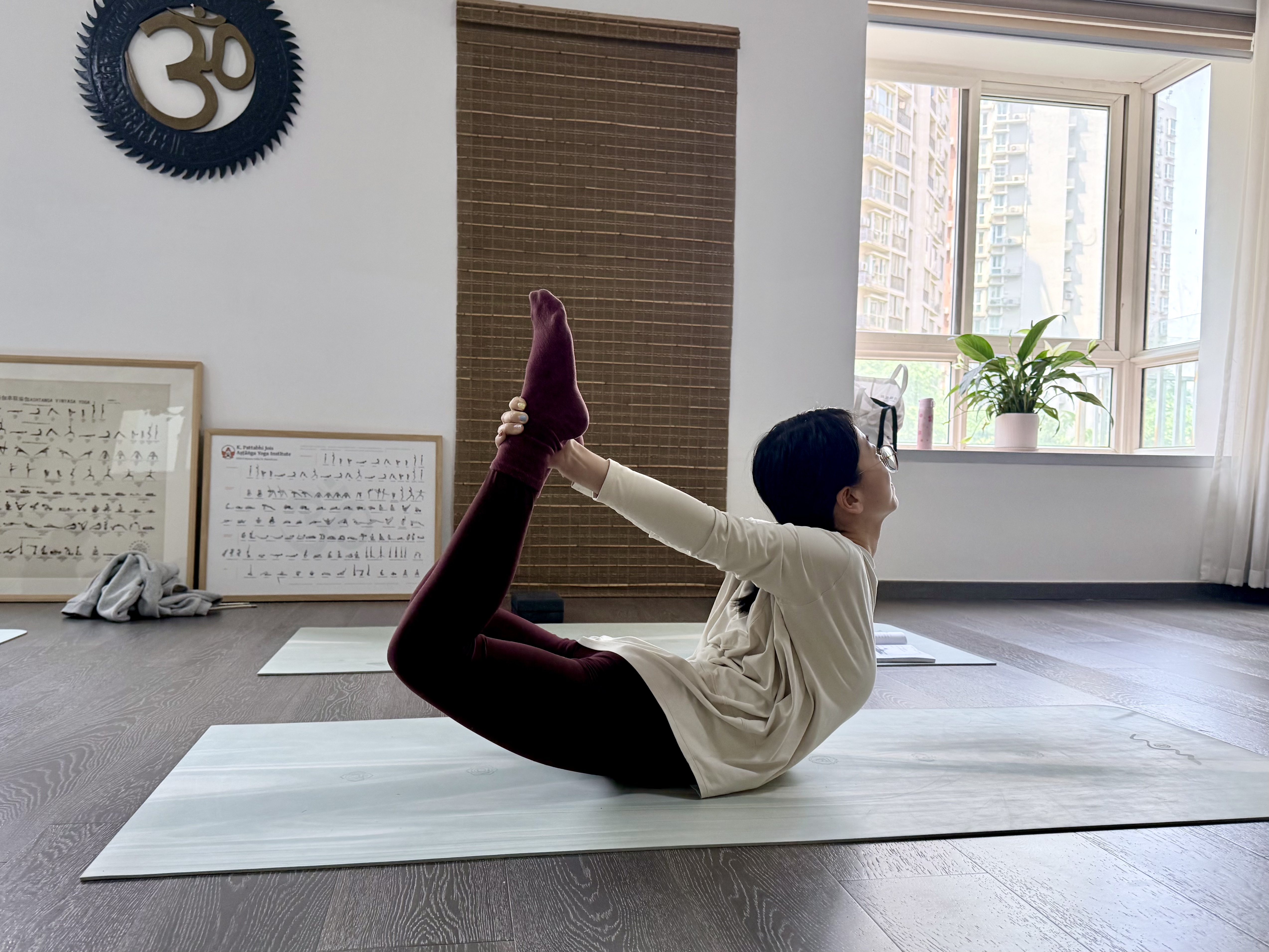
Bow Pose (Dhanurasana): Make the heart your bow, awareness your arrow, and strike the target of your true self.
Sanskrit Etymology Analysis
Original Sanskrit Name: Bow Pose (Dhanurasana)
Etymology breakdown:
- Dhanur (धनुर): Bow
- Asana: Body Type, Agent
Literal translationBow Pose
Image Match:
- Spine = Hunched back
- Arms and legs = Bowstring
- Abdomen = Bow handle
The body is like a drawn bow, coiled with power and awareness, ready to release.
I. Classic Source
The Light on Hatha Yoga
Grasp your toes with both hands, lift from the back up toward your ears, and stretch your body like a drawn bow. This pose is called Bow Pose.
— Chapter 25
The Gheranda Samhita
Classify Bow Pose as a backbend; it is one of the core poses in Hatha Yoga.
II. Philosophical Symbolism (Vedic/Upanishadic Perspective)
1. The Bow: A Metaphor of the Mind (Mundaka Upanishad)
Upanishadic Metaphors:
- bow= Focused Mind
- Arrow= Pure Self (Atman)
- Target= Brahman (Ultimate Reality)
meaning:
With a steady mind as the bow, launch the arrow of awareness to hit the target of your true self.
Find balance in tension, surrender through effort.
2. Tension is transformation: pressure into power
The Wisdom of the Bow:
- A bow needs proper tension to shoot an arrow.
- The balance between tension and relaxation people need
- Turn life's pressure into motivation for growth
Physical:
- Open BackbendHeart Chakra (Anahata)
- Release pent-up emotions
- Awaken courage and love
Psychological:
- Build resilience through challenges
- Stay mindful amidst discomfort
- Find balance in tension
3. Divine Symbol: Shiva's Bow (Shiva Dhanush)
The Epic of Ramayana:
Rama conquered the demon king Ravana with Shiva's bow (Shiva Dhanush), symbolizingDharma triumphs over evil。
Symbolism of the Bow Pose:
- With inner integrity and strength
- Beyond physical and mental disabilities
- Return to your innate luminous nature
4. Yin-Yang Unity: The Fusion of Strength and Flexibility
Shiva-Shakti Balance:
- Men's Strength(Backbend contraction) = Shiva's stillness and awareness
- Women's Flexibility(Front Extension) = Shakti's vitality and creativity
centered on the abdomen:
- ** Bandha Contraction ** Activation
- Connect to the energy of heaven and earth
- Wake upKundalini
III. The Philosophical Intent of Practice
Physical
- Open your chest to increase lung capacity
- Strengthen your spine and improve your posture
- Activate the Core to Awaken Prana
- Massage abdominal organs to aid digestion.
Mental Level
- Cultivate Focus
- Build mental resilience
- Cultivate Courage
- Maintain awareness under tension
- Embrace formlessness; act with purpose through a mind of non-attachment.
Spiritual
- Break through physical and mental limits
- Experience the unity of "Bow and Arrow, Walker and Path" at ****
- Approaching the ultimate state of "Oneness with Brahman" **
IV. Key Practice Points
Enter Pose
- Lie prone with legs hip-width apart.
- Bend your knees, bringing your heels close to your buttocks.
- Grasp your ankles or toes behind you with both hands.
- Inhale while lifting your head, chest, and legs.
- Arms and legs oppose each other, creating bow-like tension.
- Take 3-5 deep breaths
- Exhale and slowly lower.
Keep key points
- Expand the chest, roll shoulders back and down.
- Spine elongation without compressing the lumbar spine
- Gently engage the core to support your lower back.
- Look forward and up; gently extend your neck.
- Breathe evenly and deeply.
Exit Pose
- Exhale and slowly release your hands and feet.
- Place forehead on the floor; relax your back.
- Practice Child's Pose as a counterpose.
V. Benefits of Exercise
Health Benefits
- Strengthen back muscles
- Open up your chest and shoulders
- Improve spinal flexibility
- Stimulate abdominal organs to improve digestion.
- Improve hip flexor flexibility
- Improve breathing function
Energy Benefits
- Activate the heart chakra and open your heart.
- Awaken Your Life Energy (Prana)
- Balance Yin and Yang energies
- Stimulate the solar plexus
Mental Health Benefits
- Relieve fatigue and stress
- Boost confidence and courage
- Build focus and willpower
- Release pent-up emotions
- Boost overall vitality
VI. Contraindications and Precautions
Contraindicated Population
- Pregnant
- Severe lower back pain or herniated disc
- Recent abdominal surgery
- Severe hypertension or heart disease
- Neck injury
Important Notes
- Beginners may practice under instructor guidance.
- Avoid excessive compression of the lumbar spine.
- Breathe evenly; do not hold your breath.
- If you feel discomfort, exit the pose immediately.
- Relax in Child's Pose after the exercise.
7. Philosophical Meditation
In Bow Pose, close your eyes and feel:
Body like a bow:
- The spine is an arched structure—strong and flexible.
- The limbs are the bowstring: taut and balanced.
- The abdomen is the bow handle—stable and powerful.
Thoughts are like arrows.:
- Focused and pure
- Direct and clear
- Clear goals, unbiased approach
Awareness is the target.:
- Embrace all experiences
- No judgment, no resistance
- Just observe as it is.
Find balance within the tension.
Find surrender in the effort.
Find the formless within the form.
Conclusion
Bow Pose (Dhanurasana) is more than a backbend—it's the embodiment of Vedic philosophy:
- The heart is like a bowFocused and stable
- Perception as an Arrow: Pure and direct
- Using Archery as a Metaphor for Spiritual Awakening: Embrace Your True Self
Live a whole, honest, and free life in the balance of tension and equilibrium, strength and flexibility, action and surrender.
As stated in the Upanishads:
With the bow as heart, the arrow as soul, and the mantra as target.
Focus on the shot. Hit the target every time.
At Sun & Moon Yoga Academy, we go beyond teaching asana techniques to guide students in deeply understanding the philosophical wisdom behind each pose. Book a trial class today and experience the transformative power of Dhanurasana (Bow Pose) for body and mind.